Thursday, April 28, 2011

The Villain of Villains

Othello has to be, without a doubt, my most favorite work of literature that we've read all year. Everything Matters! is definitely a close second, but a specific character caused me to choose Othello instead. Iago is one of my favorite characters out of any literature I've read throughout my life, and this may seem confusing. Isn't he the villain? Aren't we supposed to hate him? This is true, and I do hate him, but that's also why he's a favorite. Shakespeare wrote his character so perfectly, and created a character that we could all despise, but commend at the same time. His quotes are so memorable that I didn't need to specifically study some of them, because I could remember them off the top of my head. The statement that "we cannot all be masters, nor all masters cannot be truly followed" (1.1.40-41) still remains a relevant quote that I use often in essays.  Iago was able to sway the opinions and emotions of everyone around him with a couple simple words. This man could even make himself out to be a victim! "To be direct and honest is not safe. I thank you for this profit, and from hence I'll love no friend, sith love breeds such offense" (3.3.375-377). That is a true talent, to be able to completely turn the tables and seem as though he is the one who is being accosted. He never used violence to convince a person, and just smooth-talked his way into the puppeteer-like position he attained by tricking everyone. Almost every single step was planned, and I was amazed by his cunning. Even in the end, Iago manages to keep his cool as he tells them that "What you know, you know. From this time forth I never will speak word" (5.2.299-300). That level-headed attitude, even after being exposed for the villain he truly is, makes me cringe. Sure, I still hate him for being such a jerk, but that doesn't mean I can't appreciate the genius that is his character. In my opinion, he is one of the top villains in any piece of literature.

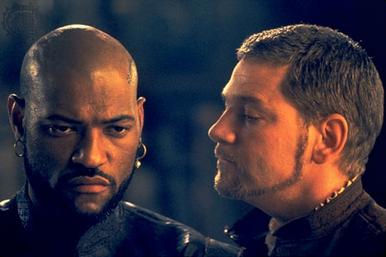
Iago doesn't use weapons or brute strength to get what he wants, oh no, he's too good for that. Instead, Iago is a master of speech, and surely doesn't "need to review [his] literary terms" (Ms. Serensky).

(Othello and Iago)

Monday, April 25, 2011

Top Ten

"Top Ten Most Thrilling Academic Moments of My High School Career."
Some of these are serious moments/achievements that affected me greatly, while others are more moments of extreme relief. "Thrilling" is an adjective, defined as producing strong and deep emotion, so all of these could fall under that category nonetheless.
  1. Becoming Editor-in-Chief of the school's newspaper. I like to think that I helped improve the newspaper, but that's not for me to decide to be honest. "I saw an opportunity to take the [newspaper] I'd always known, and change it into the [newspaper] that you, and everybody else, has always enjoyed" (Currie 163).
  2. Writing thirty pages of my original story, the majority of which was written in a single night. "Come, stand not amazed at it, but go along with me" (Shakespeare 4.3.103).
  3. Joining Choir class. I was pretty good, but my voice was abnormally low at first. I had an inability to hit any kind of high notes before practicing more and more. "I don't play accurately...but I play with wonderful expression" (Wilde 1).
  4. Knowing that I will graduate with Honors, although it seems less "thrilling" when you realize that "the whole theory of modern education is radically unsound" (Wilde 13).
  5. Creating a blog for AP English 12. This seemed like something that was extremely out of the ordinary, and could be fun. "Oh, pleasure, pleasure! What else should bring one anywhere?" (Wilde 2).
  6. Doing well on both my AP English and U.S. History tests. It was my first time taking AP tests, so I was a bit nervous, to say the least. "But what does being an adult teach you, if not how to function in the face of fear?" (Currie 256).
  7. Passing my AP Spanish class. It's a struggle. "Lord have mercy on me" (Shakespeare 5.2.57).
  8. Passing my AP Physics class, which didn't seem possible for me. "Dost thou mock me?" (Shakespeare 4.1.62).
  9. Scoring a 27 on the ACT, but doesn't seem as impressive when compared to many other people at Chagrin. "I do not approve of anything that tampers with natural ignorance" (Wilde 13).
  10. Receiving an A in AP English for the first time. "And so anything, anything, anything is possible" (Currie 302).
I feel as though the last half of this list makes me seem like a less confident person/student than I really am, and that's not what I meant to do. It's just that I tend to stress over school a lot, a lot more than I probably should. I've had countless "thrilling" moments throughout my high school career, but the majority of them aren't specifically academic.

Thursday, April 21, 2011

To a T

Thus far, my favorite poem has been "Sestina," by Elizabeth Bishop, mainly because of its unique repetition of "tears" (6) and the characterization of the objects. In a really weird way, I felt as though I could give each object a personality of sorts, due to the way Bishop describes them. Bishop brings the objects to life through the descriptions, like when the narrator mentions how the kettle "sings" (11), while the almanac and stove speak later on. "'But what exactly is this about, here?'" (Currie 211). The poem was a very interesting tale of a child and her grandmother, and how they cope with the death of someone close to them. No words are exchanged between them, but there is still a tension in the air. The child is absorbed in her drawing, while the grandmother focuses on not crying. It's difficult, however, with all the "tears" around her. I suppose I like this poem so much, because a story is told without actual spoken words. Yes, the objects 'talk,' but it's simply for the poem's purposes; they're not actually speaking. Most might get confused, but "why is that a problem? Why is it a problem to just want" (Currie 132) readers to think for themselves? It's an extremely creative route to take, and I respect Bishop for choosing such a difficult, yet appealing way to tell their tale. "It worked to a T" (Currie 45).

Monday, April 18, 2011

So Many Eyes

I remember the AP English class after my experience with meeting David Sedaris.  Even the morning after, I was still feeling a mixture of excitement and sadness, because after all, "It is always painful to part from people whom one has known for a very brief space of time" (Wilde 31). A good portion of the class is a blur, but I cannot imagine a more embarrassing, yet favorite day. I entered the room, fully prepared to start telling Ms. Serensky all about what had happened. Before I could even say anything, she grinned and proceeded to ask, "How was it meeting him?" I was slightly confused, because I was one hundred percent sure that I hadn't said anything to anyone at the school, but then she explained. "Mr. King was there, and told me about it." In all honesty, I must say, "[I] wish they understood that there is joy in this fact, greater joy" (Currie 302) than I had experienced in any other class. I'm not quite sure how to put it, but it makes me uncomfortable, yet proud to know that other people know of my accomplishment. Not that meeting David Sedaris is an 'accomplishment,' but the act of speaking in front of thousands of people as I introduced him. I didn't explain much, however, as I took my seat and Ms. Serensky started class. I was surprised though, when she proclaimed that the next few minutes would be spent focusing on me as I explained what had happened, and then others could ask questions. Again, I felt uncomfortable as all eyes were on me, but then I was reminded of something: I had a couple thousand eyes focused on me during my introduction, so why was this more difficult? Probably because I actually know my classmates, and will see them for months to come. Speaking in front of a bunch of faceless people is easy, because it isn't intimate. Speaking to a small group of people you know personally? That is ten times more difficult. I recollected the events nonetheless, to which everyone was generally impressed or, at the very least, surprised. I even remember someone blurting out how they wouldn't have been able to speak as I had done, but I rejected their claim: "I think thou art just, and think thou art not" (Shakespeare 3.3.382).While I do believe public speaking to be a talent of sorts, I still think that anyone can do it. I appreciated the praise, but it's something that any person could do if they believed in themselves enough. So yes, it is impossible for some people, but only because they don't believe they can speak in public.

Class continued on as usual after the short diversion, but it was definitely a defining moment in my high school career. Luckily, I already possess an ability that many will not have for years to come.

Unfortunately, I'm terrible at a lot of other things, like pronouncing long words.

Also, I need this shirt.

Thursday, April 14, 2011

Judgemental

Partial transcripts from the files of Lady Bracknell. Client is Rodney Thibodeau. Sessions conducted between April 13th, 2011 and April 14th, 2011. Transcribed to hard cpy from Dictaphone recordings.

LB: "I have always been of opinion that a man who desires to get married should know either everything or nothing. Which do you know?" (12).
RT: I'm not sure.
LB: Surely you must have an opinion about your own knowledge.
RT: "You'll just tell me I'm wrong. Say I'm stupid" (136).
LB: So you're saying you know nothing?
RT: "This doesn't feel like help to me" (137).
LB: No, no, "I am pleased to hear it. I do not approve of anything that tampers with natural ignorance" (13).
RT: Oh, uh...thanks? I dunno where you're going with this, to be honest. Can I leave now?
LB: "Ignorance is like a delicate fruit; touch it and the bloom is gone" (13).
RT: I've gotten hit with a couple baseballs before, so I don't see what that's gotta do with me. Plus, I'm not a desolate fruit.
LB: Delicate.
RT: Delicate?
LB: Delicate.
RT: Right, that. Anyways, I just don't see what why you're asking me this stuff. We've been here for hours.
LB: It has been approximately five minutes since you first arrived.
RT: Five minutes?
LB: Five minutes. "And now I'll have a cup of tea, and one of those nice cucumber sandwiches you promised me" (8).
RT: "I did? When? Are you sure?" (135). Uh, I guess I can try and make some right now if you want...I still don't like the way you're talking to me though. I'm not smart, but I'm not dumb either.
LB: Isn't that an absurd contradiction?
RT: "Yeah, I guess that doesn't really make sense. I guess it is like you say a contradiction" (130).
LB: No matter, I prefer contradiction as opposed to the actual and whole truth. It can get quite dull. Now, those sandwiches, if you please? I'll wait patiently.
RT: [an irritated frown overcomes his face as he stands and says aside, to himself] "I'm gonna get real weird with it."

Monday, April 11, 2011

Your Discussion Matters!

(Junior)

It's really irritating, to be honest. I must admit that this, of all things, isn't a situation that is as irritating as the end of all things as we know it, but it's irritating nonetheless. When I receive praise, I'd rather be there to hear it for myself, rather than have a voice tell me about it. The voice told me that an English class was discussing about me and my changed ways, after my choice to relive an alternate path. They live in a far off, warm, and wondrous land of Chagrin Falls, Ohio.

You see, that was a joke. Ohio, from what I've been told, is a very...Nevermind, it doesn't matter.

That was another joke. Man, I am on a f***ing roll.

But seriously, that's beside the point. The voice informed me of a particular quote made by John Shoemaker, which caused me to chuckle for quite some time. "So by stepping on a bee, we just killed Thomas's doctor career." I laughed at this, simply because of how right and wrong it is. That's not possible, you say? Well, I've got to correct you there, because anything, anything, anything is possible. While it's true that such a seemingly insignificant moment could impact his life (and possibly his career), I believe he could still become a doctor. Every action affects our future, so taking an initiative can greatly improve one's chances at a happier life. Some may say, "It doesn't matter if I...die out here," as I once believed, but I am happy to report that it is a completely invalid statement. "I always expected the worst and because life has never, not once, taught me anything different," I thought that I had no control over my own life.

The fact is, we do have control. Compelte and utter control. At one point, I distinctly remember berating people for not accepting my original plan for salvation: "'Idiots...Dangle salvation right in front of them, and they won't take it.'" I realize that this is wrong, because it is the experience of our actions that makes life worth living, not simply living for the sake of living.

I suppose what I am trying to say, is that Thomas Donley still has a chance to become a doctor if he wants. The decision is his and his alone. If he eventually decides to change his mind, then anything else he does will have just as much importance. Whether it's a janitor or heart surgeon, every single person and every single action matters.
Thursday, April 7, 2011

My Dearest Iago,

It's difficult to recall my previous year of AP English, when I was a young and naive Junior. I have come to question my reasons for choosing to go into AP English from the beginning. Why this inquiry came to mind, I'm not entirely sure, but it still deserves an answer. Oddly enough, I think it's the constant talk about it amongst my Junior friends while I was a Sophomore. Every day I was forced to listen about "Ms. Serensky this" and "Ms. Serensky that." I also consider myself a relatively intelligent individual, so I thought that it might be time to push myself even further with a more difficult class and teacher. Now, I already know your famous saying, so don't repeat it in your reply after receiving this letter. You'll plainly state, "We cannot all be masters, nor all masters/Cannot be truly followed" (1.1.38-39).  I understand your train of thought, but that's not the case here. It's true that there are incapable "masters," (although I think a better word would be leader) but Ms. Serensky proved herself to be an outstanding teacher, without even knowing her. How? I had heard about the tremendous passing rate for the AP test. My friends' talk of Ms. Serensky wasn't the only reason I decided to take the class though. My main reason for taking the class was because I wished to better myself. This goes hand-in-hand with competition among my other peers as well, which isn't surprising. (Most) Everyone strives to be the best they possibly can, and it can cause people to fight over a lot of things. Oh how you'd laugh if you could have seen us, so timid first semester, then yelling over one another second semester as we tried to not fail in-class discussions: "He'll be as full of quarrel and offense/As my young mistress' dog" (2.3.48-49). Remember that quote, you dastardly fellow? Well, it's true that we made ourselves like crazed dogs, but it was strangely fun as people competed for the simple prize of being able to talk.

As I said earlier though, I simply wanted to better myself through intensive writing. I've known I want to be a writer since the beginning of Freshman year, so I figured AP English would help my future career in writing. What occupation I would be was unknown, but it would involve writing, that's for sure. Although I do wonder how alike we are, Iago. I despise you for your evil actions, but also understand your mind (which slightly scares me). I do not think that I am a selfish man, but couldn't taking AP English be considered an act of selfishness? For what reason did I start taking the class? Well, for myself, of course! It's a plain way to think, but also has a bit of truth. We do differ in one way, however, and that's shown through your silly comment about "following" Othello: "In following him, I follow but myself" (1.1.55). Yes, I did decide to take AP English and learn from Ms. Serensky for selfish reasons, but I don't do it solely to help myself. I hope to improve the lives of other people with my writing, to inspire others into following their ambitions, and to show how dedication can lead to success.