Dear Journal,
I know how you must feel, but worry not. Despite what the voice states in Everything Matters!, there is never a end. True, the time with my fellow AP English students and Ms. Serensky is coming to a close, but it just marks the beginning of the next chapter that is my life. Not just my life for that matter, but all of our lives. Another year has come and gone, but not without events that have altered the very way we view and live life. The struggles we have faced as AP English students have brought us together through the collective stresses of constant homework, reading, and essays. We get homework, which causes us to complain, which causes us to laugh, which brings us joy. So...English homework brought us joy? I'd rather not create a conundrum, and I'll stick to the simple goodbye.
It has been fun, honestly and truly. Whether I know it or not, everyone has impacted me in some way, and for that I am thankful. I feel as though I am a better writer and person because of this course, so I will always look back on this time we've had in fond memory. The class had its ups and downs; we all know this, but the ups felt as though they skyrocketed, while the downs only made us more determined to reach for the sky.
Some people go through their entire life just staring up at the sky, wishing to touch it.
We choose to take matters into our own hands. We reach for the sky and keep reaching until our hands grasp its vastness. We don't keep the sky for ourselves though, we release it so future generations have something to aim for, just as we did.
If that last couple of sentences confuses you, Journal, then allow me to simplify it. Rather than hoping and wishing for something to happen, we go out and accomplish it ourselves, rather than waiting for something to happen. In order for this to continue though, we need to encourage future generations to do the same. Do we want a society built upon "I could have, but didn't" or "I should have, and did"?
Fellow AP English students, here is my piece of wisdom I'd like to leave with: never give up on your dreams. If you do, that's all they'll ever be, fleeting dreams of a yesterday that could have been today.
Peace Out,
Marc
Marc G.'s AP English 12 Loud and Proud Blog for Rockin' Rascals
Rockin' and Rollin' his way to the top.
Monday, May 9, 2011
Thursday, May 5, 2011
Oh, It's Worth It. Usually.
- It's almost impossible not to pass the AP test. Ms. Serensky fully prepares you for it.
- It helps your writing in general, which is more important than an AP score, in my opinion.
- You become more responsible. Ms. Serensky doesn't accept late work. Ever.
- It's something else to complain about, because let's be honest, we love to complain.
- The books you will read are usually really interesting and great pieces of literature. Some books might be utterly depressing, but that doesn't make it a bad book.
- The unity between all AP English students with their shared love and pain is an experience all on its own, and brings everyone together.
- You get graded on in-class discussions, which essentially is everyone just arguing over an obscure part in the book that may or may not ever come up again.
- You can display your
nerdinessintelligence by trying "one-up" everyone else in the class; a.k.a.., Thomas Donley's job. - You get to hang out with Ms. Serensky every single day. I mean, it doesn't get much better than that, right?
- Witness the hilarity as someone attempts to go to the restroom in AP English. Ms. Serensky has never said that she prohibits the use of the restroom, but everyone just assumes it.
Her reaction to #10.
Ms. Serensky, can I use the-nevermind...
Monday, May 2, 2011
No Nonsense
Junior: "Imagine having that same feeling every day of your life..." (Currie 251).
Iago: "Practicing upon his peace and quite,/Even to madness" (Shakespeare 2.1.310-311).
Jack: "For Heaven's sake, don't try to be cynical. It's perfectly easy to be cynical" (Wilde 7).
Junior: "Regular classes don't work for either of us" (Currie 64).
Iago: "Do it not with poison. Strangle [the test] in [its] bed" (4.1.209).
Junior: "What do you mean?" (Currie 244).
Jack: "Oh, that's nonesense, [Iago]. You never talk anything but nonsense" (Wilde 19).
Iago: "Come, stand not amazed at it, but go along with me" (Shakespeare 4.3.239).
Jack: "You have got to leave..." (Wilde 30).
Iago: "From this time forth I never will speak word" (Shakespeare 5.2.300).
Junior: "Well I think you get a free pass on that, considering" (Currie 273).
Jack: "I hate talking" (Wilde 17).
Junior: "We'll make it quick" (Currie 279).
Iago: "Whilst you were here, o'erwhelmed with your grief-" (4.1.78).
Jack: "Your vanity is ridiculous, your conduct an outrage, and your presence...utterly absurd" (Wilde 30).
Iago: "I humbly do beseech you of your pardon/For too much loving [him]." (3.3.212-213).
Iago: "Practicing upon his peace and quite,/Even to madness" (Shakespeare 2.1.310-311).
Jack: "For Heaven's sake, don't try to be cynical. It's perfectly easy to be cynical" (Wilde 7).
Junior: "Regular classes don't work for either of us" (Currie 64).
Iago: "Do it not with poison. Strangle [the test] in [its] bed" (4.1.209).
Junior: "What do you mean?" (Currie 244).
Jack: "Oh, that's nonesense, [Iago]. You never talk anything but nonsense" (Wilde 19).
Iago: "Come, stand not amazed at it, but go along with me" (Shakespeare 4.3.239).
Jack: "You have got to leave..." (Wilde 30).
Iago: "From this time forth I never will speak word" (Shakespeare 5.2.300).
Junior: "Well I think you get a free pass on that, considering" (Currie 273).
Jack: "I hate talking" (Wilde 17).
Junior: "We'll make it quick" (Currie 279).
Iago: "Whilst you were here, o'erwhelmed with your grief-" (4.1.78).
Jack: "Your vanity is ridiculous, your conduct an outrage, and your presence...utterly absurd" (Wilde 30).
Iago: "I humbly do beseech you of your pardon/For too much loving [him]." (3.3.212-213).
Thursday, April 28, 2011
The Villain of Villains
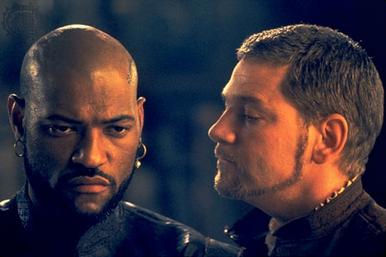
Othello has to be, without a doubt, my most favorite work of literature that we've read all year. Everything Matters! is definitely a close second, but a specific character caused me to choose Othello instead. Iago is one of my favorite characters out of any literature I've read throughout my life, and this may seem confusing. Isn't he the villain? Aren't we supposed to hate him? This is true, and I do hate him, but that's also why he's a favorite. Shakespeare wrote his character so perfectly, and created a character that we could all despise, but commend at the same time. His quotes are so memorable that I didn't need to specifically study some of them, because I could remember them off the top of my head. The statement that "we cannot all be masters, nor all masters cannot be truly followed" (1.1.40-41) still remains a relevant quote that I use often in essays. Iago was able to sway the opinions and emotions of everyone around him with a couple simple words. This man could even make himself out to be a victim! "To be direct and honest is not safe. I thank you for this profit, and from hence I'll love no friend, sith love breeds such offense" (3.3.375-377). That is a true talent, to be able to completely turn the tables and seem as though he is the one who is being accosted. He never used violence to convince a person, and just smooth-talked his way into the puppeteer-like position he attained by tricking everyone. Almost every single step was planned, and I was amazed by his cunning. Even in the end, Iago manages to keep his cool as he tells them that "What you know, you know. From this time forth I never will speak word" (5.2.299-300). That level-headed attitude, even after being exposed for the villain he truly is, makes me cringe. Sure, I still hate him for being such a jerk, but that doesn't mean I can't appreciate the genius that is his character. In my opinion, he is one of the top villains in any piece of literature.
Iago doesn't use weapons or brute strength to get what he wants, oh no, he's too good for that. Instead, Iago is a master of speech, and surely doesn't "need to review [his] literary terms" (Ms. Serensky).
(Othello and Iago)
Monday, April 25, 2011
Thursday, April 21, 2011
To a T
Thus far, my favorite poem has been "Sestina," by Elizabeth Bishop, mainly because of its unique repetition of "tears" (6) and the characterization of the objects. In a really weird way, I felt as though I could give each object a personality of sorts, due to the way Bishop describes them. Bishop brings the objects to life through the descriptions, like when the narrator mentions how the kettle "sings" (11), while the almanac and stove speak later on. "'But what exactly is this about, here?'" (Currie 211). The poem was a very interesting tale of a child and her grandmother, and how they cope with the death of someone close to them. No words are exchanged between them, but there is still a tension in the air. The child is absorbed in her drawing, while the grandmother focuses on not crying. It's difficult, however, with all the "tears" around her. I suppose I like this poem so much, because a story is told without actual spoken words. Yes, the objects 'talk,' but it's simply for the poem's purposes; they're not actually speaking. Most might get confused, but "why is that a problem? Why is it a problem to just want" (Currie 132) readers to think for themselves? It's an extremely creative route to take, and I respect Bishop for choosing such a difficult, yet appealing way to tell their tale. "It worked to a T" (Currie 45).
Monday, April 18, 2011
So Many Eyes
I remember the AP English class after my experience with meeting David Sedaris. Even the morning after, I was still feeling a mixture of excitement and sadness, because after all, "It is always painful to part from people whom one has known for a very brief space of time" (Wilde 31). A good portion of the class is a blur, but I cannot imagine a more embarrassing, yet favorite day. I entered the room, fully prepared to start telling Ms. Serensky all about what had happened. Before I could even say anything, she grinned and proceeded to ask, "How was it meeting him?" I was slightly confused, because I was one hundred percent sure that I hadn't said anything to anyone at the school, but then she explained. "Mr. King was there, and told me about it." In all honesty, I must say, "[I] wish they understood that there is joy in this fact, greater joy" (Currie 302) than I had experienced in any other class. I'm not quite sure how to put it, but it makes me uncomfortable, yet proud to know that other people know of my accomplishment. Not that meeting David Sedaris is an 'accomplishment,' but the act of speaking in front of thousands of people as I introduced him. I didn't explain much, however, as I took my seat and Ms. Serensky started class. I was surprised though, when she proclaimed that the next few minutes would be spent focusing on me as I explained what had happened, and then others could ask questions. Again, I felt uncomfortable as all eyes were on me, but then I was reminded of something: I had a couple thousand eyes focused on me during my introduction, so why was this more difficult? Probably because I actually know my classmates, and will see them for months to come. Speaking in front of a bunch of faceless people is easy, because it isn't intimate. Speaking to a small group of people you know personally? That is ten times more difficult. I recollected the events nonetheless, to which everyone was generally impressed or, at the very least, surprised. I even remember someone blurting out how they wouldn't have been able to speak as I had done, but I rejected their claim: "I think thou art just, and think thou art not" (Shakespeare 3.3.382).While I do believe public speaking to be a talent of sorts, I still think that anyone can do it. I appreciated the praise, but it's something that any person could do if they believed in themselves enough. So yes, it is impossible for some people, but only because they don't believe they can speak in public.
Class continued on as usual after the short diversion, but it was definitely a defining moment in my high school career. Luckily, I already possess an ability that many will not have for years to come.
Unfortunately, I'm terrible at a lot of other things, like pronouncing long words.
Also, I need this shirt.
Class continued on as usual after the short diversion, but it was definitely a defining moment in my high school career. Luckily, I already possess an ability that many will not have for years to come.
Unfortunately, I'm terrible at a lot of other things, like pronouncing long words.
Also, I need this shirt.
Subscribe to:
Comments (Atom)